Discovering 'Everyday Chemistry' through color, art, and bubbles

By Charlyn Paradis
tie-dye cloths brick wall

Tie-dye cloths made in the Everyday Chemistry class (Photo by Ruth Son)

When we start our day, most of us are not thinking, ‘What kind of chemical reaction shall I choose today?’ But as soon as we get going, we are essentially playing ‘chemist.’ We wash with soap. We choose colorful clothing to wear. We use toothpaste to clean our teeth.

Everything that exists, including our own bodies, is made up of chemicals. Even as we eat, sleep, or breathe, chemical reactions are taking place.

“Chemistry is literally all around us, whether you are cooking, checking the weather, or at an art gallery,” explains Ruth Son, a preceptor for the Department of Chemistry. “There are so many places where you can find chemistry involved. We’re just not aware of it.”

Son helps undergraduate students learn about less obvious ways chemistry shapes daily life in the Everyday Chemistry summer course.

“I structured the class around field trips because I wanted to have collaborations where students go into another field and see chemistry in action,” she said.

“The first connection was Yale Farm,” where students observed the indigo project to learn how the dye is made. Indigo dye is a complex process involving plant harvesting and dye extraction. 

  • indigo plant
  • liquid dye in bucket
buckets of dye

Different additives were used to create different shades of color. (Photo by Ruth Son)

There are several chemical transformations involved in converting indigo plants into pigment. Making indigo dye involves harvesting and soaking the plant to extract a colorless compound (indican) from the leaves. The leaves are then fermented (anaerobic metabolism). The leafy solution is aerated (oxidized) to convert it into the blue indigo pigment. Lime is added to the liquid to increase alkalinity, helping the pigment settle and form a thick blue sludge. The liquid is siphoned off, and the sludge is ready for use or for drying into a powder.

colored cloth

Various shades of dye (Photo by Ruth Son)

The students used the product to dye cloth, which they could take home.

“In the lecture the next day, we do a follow-up and talk about the chemistry,” said Son.

Thanks to chemistry, we enjoy color to express ourselves in clothing and art. And it is chemistry that preserves art over time.

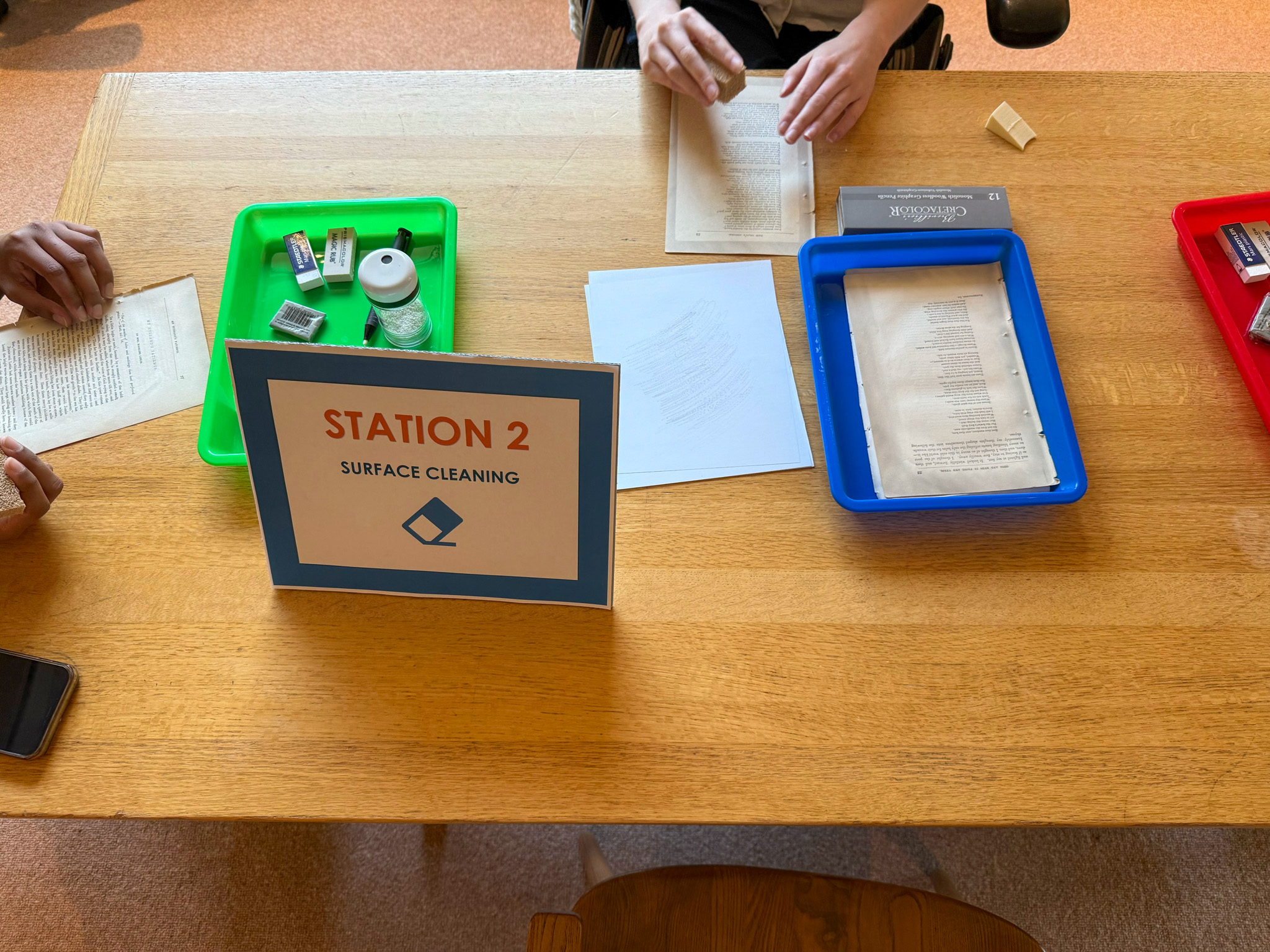
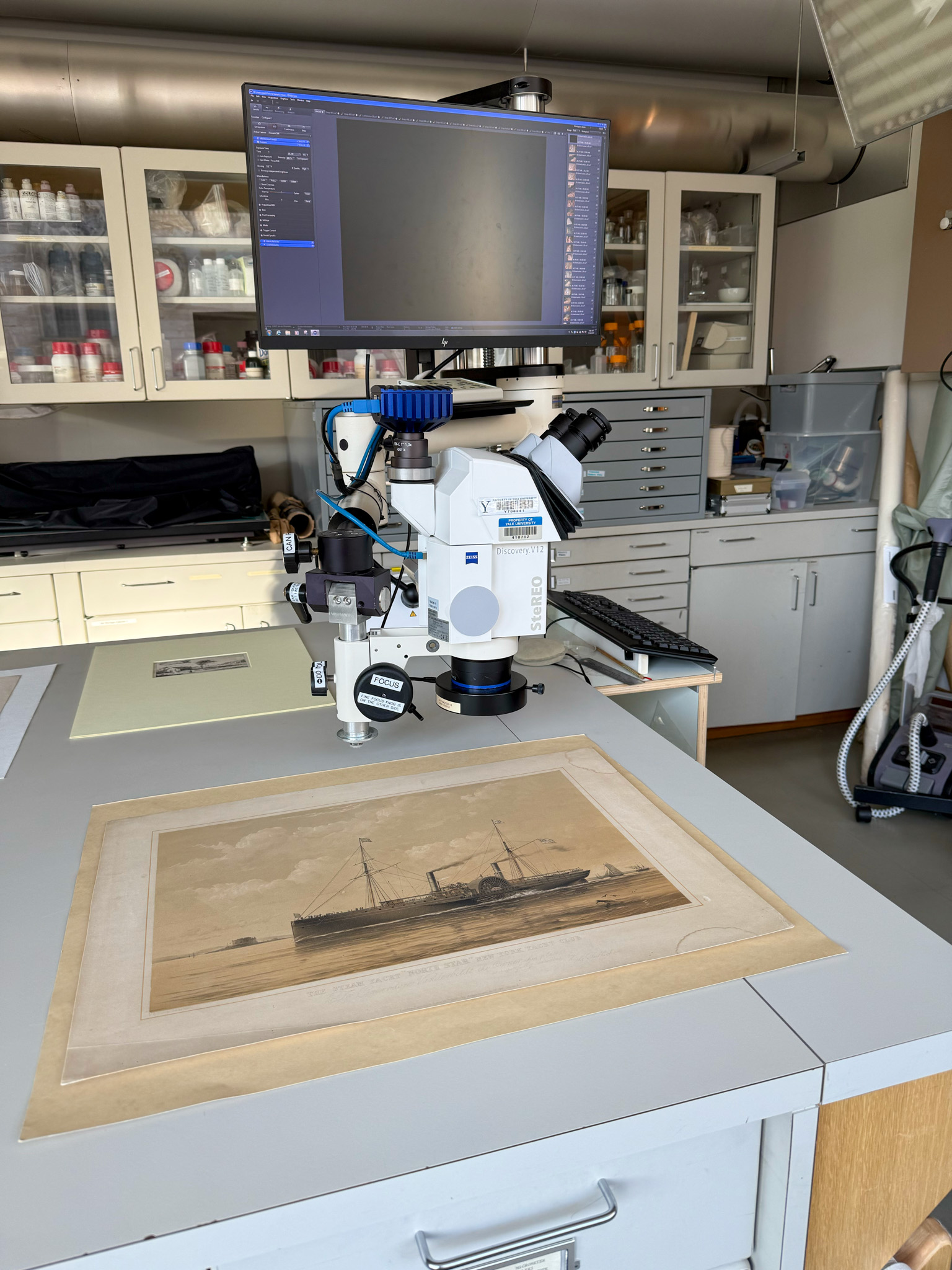
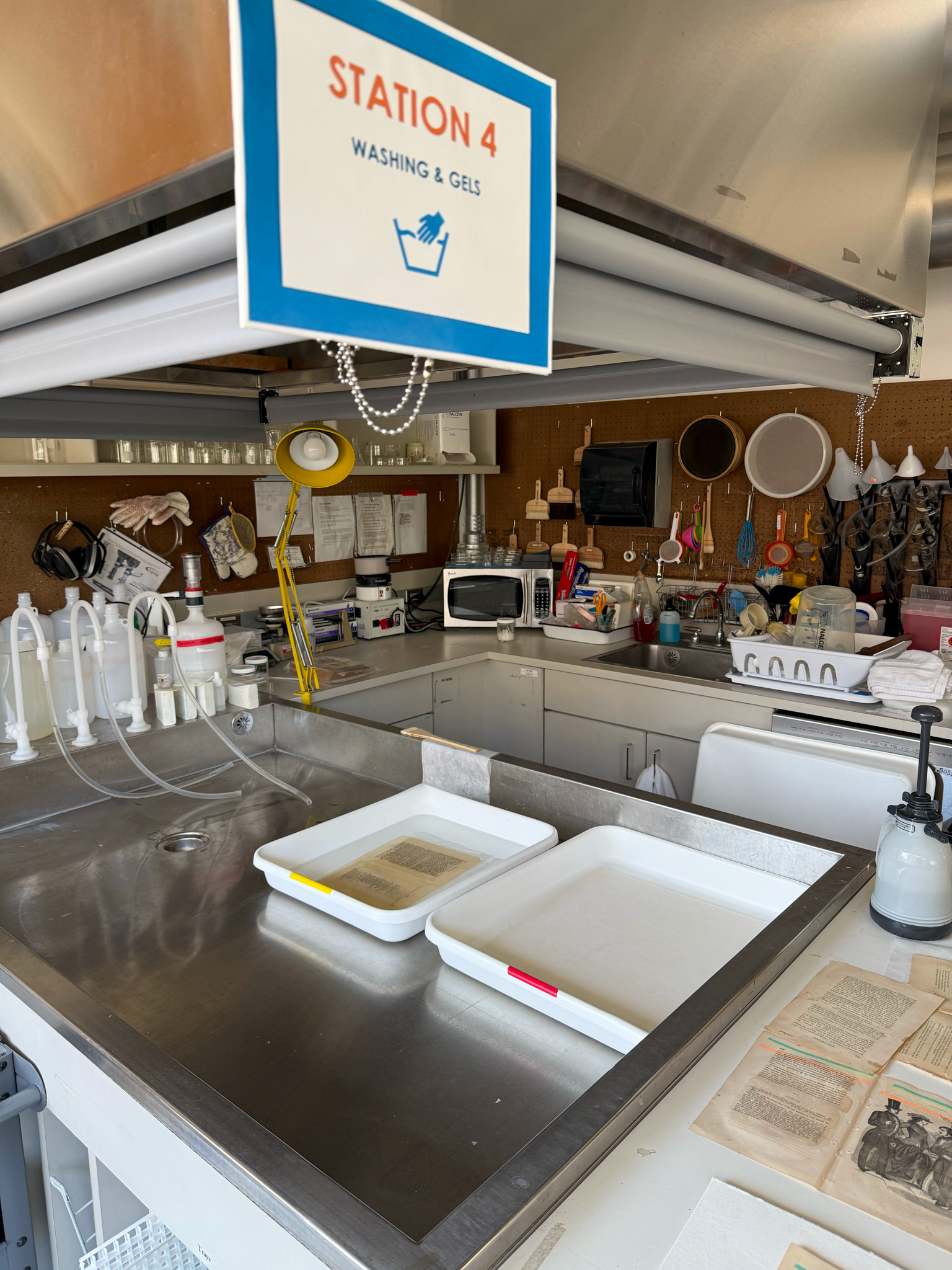
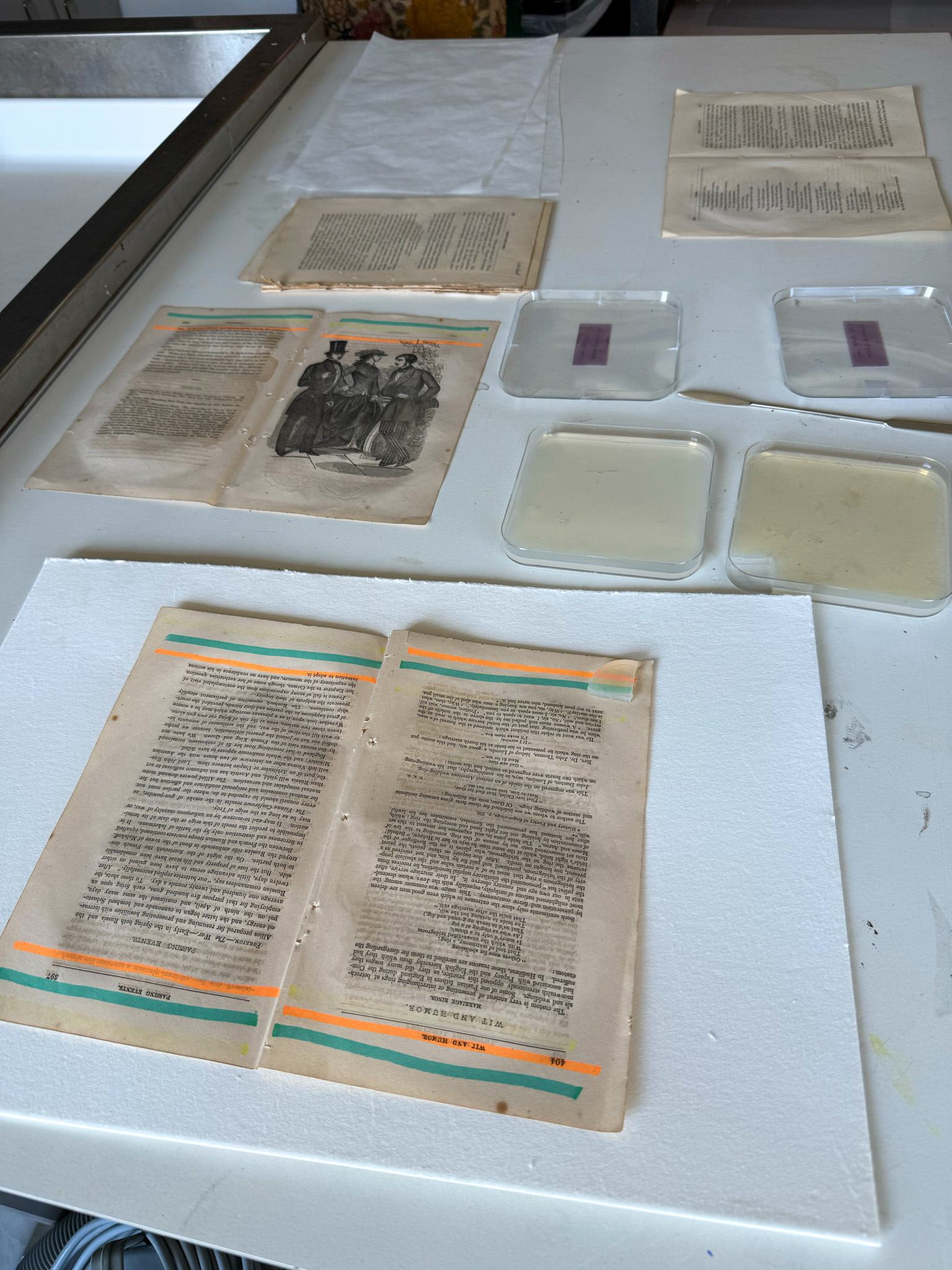
To see how this is done, the class visited the Paper Conservation Lab at the Yale Center for British Art. Art conservators showed the students how they use chemistry in their daily work to preserve historical pieces.

  • UV light on paint swatches
  • computer

Images: On the left, ultraviolet light reveals the types of dyes used and sketches or alterations beneath the surface. On the right, looking for Indian yellow in a very large painting. (Photos by Ruth Son)

The students explored the imaging room to see how X-ray fluorescence and infrared imaging enable conservators to see beneath a painting’s surface without damaging it. Specifically, these techniques help identify chemical elements and sketches of the original work and any subsequent damage. From there, conservators can choose the appropriate solvents and materials for cleaning, restoration, or protection.

In yet another lesson, chemistry and craft met performance art when Will Walker, a senior undergraduate chemistry student, demonstrated his giant-bubble-making hobby. Known as the bubble guy, he is usually seen around campus, elegantly sweeping his sudsy wands through the air to form iridescent wobbling spheres. 

student giant bubble

Will Walker

When it comes to bubble-making, there’s more to it than meets the eye. Walker explains, “Soap cleans your dishes because it’s good at making water and oil—the unmixable archrivals of the kitchen—come to the same table. It grabs onto oil, and the water grabs onto it. It works for bubbles because air, as it turns out, is oily! It’s made up of mostly nonpolar oxygen and nitrogen gas! When I make a big bubble, I’m catching all the oily air in a big net of water, with soap acting as a bridge on both sides of the bubble wall. If your dinner grease was as light as air, those suds’d float too!”

The Everyday Chemistry class is a great introduction to chemistry. Students explore the various ways the science presents itself in our lives beyond common examples. Through field trips and hands-on lessons, students see firsthand how people in different fields use chemistry to accomplish tasks we take for granted, like coloring our favorite blue jeans or preparing a Picasso for display.

As Son plans this summer’s course, she’s looking for everyday chemists to share their science. Do you have a hobby that just so happens to involve chemistry? Consider giving a demonstration. Reach out to Ruth Son to sign up. No chemistry background is required, because chemistry is for everyone.