Jon Ellman’s research on tert-butanesulfinamide—how ongoing advancements in synthetic chemistry facilitate drug discovery and contribute to life-saving treatments.
From dark days of HIV-AIDS, advances in aza-sulfur chemistry enable breakthrough treatment—and other chemical innovations

Jon Ellman with tert-butanesulfinamide chemical structure and early product sample
“It was a death sentence.” Jon Ellman recalls reading the death toll week after week in the free newspaper on his commute to work.
“The Bay Area Reporter would provide lists of people who passed from AIDS, every single issue. It was pretty dramatic.”
The year was 1989, the midst of the HIV-AIDS epidemic, characterized by devastating loss of life with no real treatment in sight. He remembers that one thing was clear. “If you caught it, you were going to die.”
At the time, Ellman—now the Eugene Higgins Professor of Chemistry and professor of pharmacology at Yale University—was a postdoctoral researcher at the University of California (UC), Berkeley. He was intent on developing robust, general synthetic chemistry to advance medicine.
As HIV-AIDS decimated communities in the Bay Area and all over the world, scientists toiled in labs to illuminate the origins and mechanisms of this mysterious virus.
In the mid-1990s, the development of highly active antiretroviral therapy brought much-needed light into the dark fight. This powerful cocktail of drugs enabled people to suppress HIV, giving hope to many.
Despite the significant reduction in infection rates, many people remained untreated due to challenges such as access, cost, stigma, and a complicated dosage regimen. An easier solution was needed.
This is where synthetic chemists become crucial. They develop new ways to create novel chemical compounds essential for drug discovery and development. Their innovations address the barriers to accessible and effective treatments.
In 1997, Ellman was a professor at UC Berkeley, seeking to develop more efficient and general approaches to prepare an important class of compounds called amines. Although they are incorporated in >75% of drugs and drug candidates, their asymmetric synthesis had not been extensively developed.
He and researchers from his lab (then-graduate students Guangcheng Liu and Derek Cogan) set out to make amines with the chiral reagent tert-butanesulfinamide (tBS). tBS, which could be prepared from a sulfur by-product of oil, offered a cost-effective starting material. But it had never previously been prepared in enantiomerically pure form.
Their 1997 research, published in the Journal of the American Chemical Society, details a practical two-step method for producing large quantities of tBS and its application to the asymmetric synthesis of certain types of amines. In subsequent publications they broadened the scope of amines that could be prepared using the reagent. The chemistry proved to be efficient, robust, and general—meaning it could be applied to a wide variety of amine structures.
Many researchers in academia and industry began to utilize the reagent either to develop new synthetic methods or to directly apply it to drug discovery and production.
“As the chemistry became popular and the pharmaceutical industry wanted to use the reagent on much larger scales, it became clear we had to refine the method for preparing the tBS reagent,” said Ellman.
“In our initial work, we actually prepared quite large batch sizes for an academic lab—approximately 50-gram scale. But that wasn’t enough if you were going to produce clinical candidates or drugs. So, the lab had to put in a lot of effort into developing a more efficient process that was truly scalable.”
Daniel Weix, a graduate student in Ellman’s lab at the time, developed the method that is used today.
In their 2003 research published in Organic Letters, they developed a different, more rigid chiral ligand that enabled the reaction to be performed under completely homogeneous conditions at high concentration, minimizing reaction vessel size and reducing waste.
With these enhancements, “we developed a method that was truly scalable for the production of the reagent at low cost and high reliability,” said Ellman.
To date, innumerable clinical candidates and at least 10 FDA-approved drugs and agrochemicals (herbicides and pesticides) have been synthesized using tBS chemistry, also known as Ellman’s auxiliary. One such notable drug is lenacapavir, which was named the 2024 Breakthrough of the Year by Science magazine.
Forty-three years after the HIV-AIDS epidemic began in 1981, lenacapavir marked a pivotal moment in HIV prevention. Unlike pill-form pre-exposure prophylaxis, this injectable drug protects people for six months with each shot. With more achievable drug adherence and an astonishing 100% efficacy rate in a large clinical trial, the drug is set to be a game-changer.
This incredibly complicated molecule, developed by scientists at Gilead Sciences, has been years in the making. Although Ellman’s lab was not responsible for the making of the drug, their chiral reagent was used in the process.
“I’m impressed with what they were able to accomplish,” said Ellman.
“When I started [research], AIDS was a death sentence. Then it became a manageable disease, but people were still getting infected. The reason this drug has caused so much excitement is there’s hope it could have a great impact on prevention and reduce the infection rate.”
“I take great enjoyment in seeing that the chemistry we’ve used actually facilitates others’ discoveries of important agrochemicals or pharmaceuticals.”
But Ellman’s greatest satisfaction is in “seeing what graduate students, postdoctoral fellows, and undergrads go on to do with their careers.”
One of his former graduate students, Katrien Brak, who also worked on the tBS chemistry projects, was the director of chemical development and drug substance manufacturing at Cytokinetics during the time that aficamten advanced through clinical trials—another drug that uses tBS chemistry and that was just approved in December of 2025. This compound treats a serious heart condition called symptomatic obstructive hypertrophic cardiomyopathy.
“Daniel Weix, who’s now a full professor at the University of Wisconsin, has pioneered and continues to advance an area called cross-electrophile coupling in his own lab. And this chemistry has also been hugely impactful to drug discovery,” said Ellman.
The student researchers from the 1997 study are now both senior vice presidents of chemistry at companies—Cogan at Volastra Therapeutics and Liu at MieraGTx—developing clinical candidates for the treatment of serious diseases, such as cancer and neurodegenerative diseases.
The Bay Area Reporter newspaper somberly published a list of people who died from AIDS every week for 15 years through the 1980s and 1990s as the epidemic plagued humanity. Ellman remembers the famous headline that ran in big red letters across the front page of the August 1998 issue. It read “No Obits” because for the first time in years, no AIDS-related obituaries had been submitted.
Today, AIDS-related deaths are a lot lower, but the HIV infection rate is still abysmally high—roughly 1.3 million new infections in 2024. Yet there is hope. Lenacapavir could soon result in a reduction in infections.
As Ellman’s former students advance their own science, his current cohort of trainees at Yale is working on the next big finding. For example, they are developing new ways to synthesize other types of chiral aza-sulfur motifs—such as sulfoximines—that are increasingly being incorporated into drugs to improve their properties, such as potency, selectivity, and oral availability.
Funding for the tBS studies was provided by the National Science Foundation. The National Institutes of Health has provided support for the research in general.
More on Ellman
He joined Yale faculty in 2010 and has won numerous awards, including the Yale Dylan Hixon ‘88 Prize for Teaching Excellence in the Natural Sciences, two Yale Faculty Innovation Awards, the American Chemical Society (ACS) Award for Creative Work in Synthetic Organic Chemistry, and the ACS Herbert C. Brown Award for Creative Research in Synthetic Methods.
He is a member of the American Academy of Arts and Sciences and the National Academy of Sciences.
Featured Researcher
-
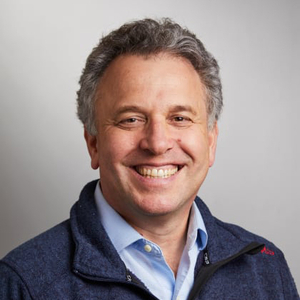
Jon Ellman
Eugene Higgins Professor of Chemistry and Professor of Pharmacology
Research Areas: Organic Chemistry and Chemical Biology