Antibody drugs are powerful proteins engineered to deliver therapy to targeted disease sites, like cancer cells. For the drug to work, the protein must maintain its structure from production to delivery to the patient. However, along the way, as the drug interacts with different surfaces – a glass vial, plastic tubing, a syringe – its structure changes and effectiveness dwindles.
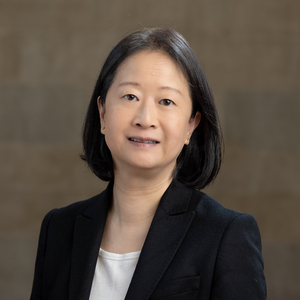
Professor Elsa Yan from the Department of Chemistry was recently awarded a Maximizing Investigators’ Research Award (MIRA) by the National Institute of General Medical Sciences to study this phenomenon. Her research will focus on the changes these proteins (biopolymers) undergo at the air-water interface.
“When proteins see a very different environment – an asymmetric environment – they tend to aggregate and unfold, so their native structure cannot be maintained,” said Yan. “Because of that, they lose their effectiveness in curing diseases. So, pharmaceutical companies are interested in figuring out how to prevent the aggregation and denaturation of proteins as they interact with all these surfaces.”
As she explains, “Most biopolymers, including proteins, DNA, and RNA, fold into macroscopic chiral structures to perform biological functions. Their folding requires water, but water behaves differently at interfaces where the bulk of the water hydrogen-bonding network terminates. Instead, an asymmetric chemical environment forms.”
The key unanswered question is how this new environment changes hydration and, consequently, the structures of the biopolymers.
To answer this question, Yan will use a research tool called chiral-sensitive vibrational sum frequency generation spectroscopy (chiral SFG) and enlist the help of theoretical chemists to make accurate predictions of molecular behaviors.
Her work so far has shown that chiral SFG can provide the necessary selectivity to detect protein and DNA secondary structures and probe their first hydration shell at aqueous surfaces.
In her MIRA project, Yan will expand upon her previous work to characterize various protein reagents under different formulations and components to see how their structure and function are preserved at the surface. In doing so, she will also elucidate how the structure, as well as the hydration, of those proteins change at the air-water interface.
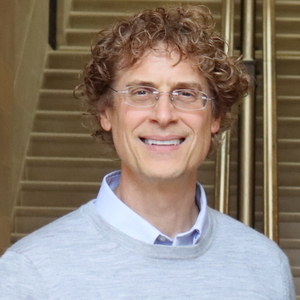
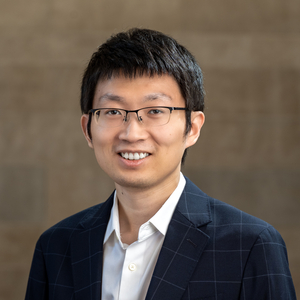
In carrying out this project, Yan will collaborate with theorists Profs. Tianyu Zhu and Victor Batista (Yale Chemistry), and Sharon Hammes-Schiffer (Princeton), who will simulate chiral SFG spectra of molecular systems that mimic the experiments performed in the Yan Lab, providing a theoretical basis for interpreting experimental data.
With their findings, the team aims to deepen our understanding of processes taking place at aqueous interfaces of living organisms and guide the molecular design of novel biomaterials, such as those used in drug delivery for disease treatment and biosensors for diagnosis. Their findings will pave the way for developing new technologies and advancing fundamental knowledge to solve problems in the biomedical sciences.