Contact Info
Chair Support
chemistry.chair@yale.edu
Faculty Support
Sarah Kraus
sarah.kraus@yale.edu
Chemistry Research Building
Room 310
Research
Research in the Hazari group involves synthetic inorganic and organometallic chemistry, with an emphasis on reaction mechanisms and catalysis. The long-term goal of most projects is to develop homogeneous transition metal catalysts for chemical transformations, which could result in the development of more energy-efficient and affordable industrial processes. Furthermore, we believe that it is important to understand reaction mechanisms, as this can play a crucial role in improving catalysts. A variety of techniques, including multinuclear NMR spectroscopy, IR and UV-Visible spectroscopy, mass spectrometry, X-ray crystallography, isotopic labeling studies, and computational chemistry, are used to characterize compounds, investigate reaction mechanisms, and perform kinetics studies. In addition, the Hazari group collaborates with various researchers both at Yale and other institutions to use organic and organometallic molecules to vary the properties of 2D materials.
More specifically, projects in the group relate to: 1) the development of catalysts for the hydrogenation of carbon dioxide into formic acid and methanol and the reverse dehydrogenation of formic acid and methanol into carbon dioxide and hydrogen; 2) fundamental understanding of the reactions between carbon dioxide and transition metal complexes; 3) the design of molecular catalysts attached to semiconductors for the photoreduction of carbon dioxide into liquid fuels; 4) understanding the role of Ni(I) complexes in organic transformations such as cross-coupling; and 5) the development of new catalysts and reagents for transition metal-mediated organic reactions, such as cross-electrophile coupling that will make reactions more sustainable. In most of the Hazari groups’ research, computational chemistry is used to support experimental observations.
Education
Postdoctoral Fellow, California Institute of Technology, 2006-2009
D.Phil. University of Oxford, 2006
M.S. University of Sydney, 2003
B.S. University of Sydney, 2002
Honors
- Rhodes Scholarship for New South Wales, 2003
- National Science Foundation Career Award, 2012
- Organometallics Fellow (from the American Chemical Society Journal Organometallics), 2012
- Alfred P. Sloan Research Fellow, 2013
- Camille and Henry Dreyfus Teacher-Scholar Award, 2014
- Selected as a ‘Rising Star’ by the 41st International Conference on Coordination Chemistry, 2014
- Arthur Greer Memorial Prize for Outstanding Scholarship by Junior Faculty Members in the Social Sciences and Sciences at Yale University, 2015
- American Chemical Society Harry Gray Award for Creative Work in Inorganic Chemistry by a Young Investigator, 2017
- Elected as Member of the Connecticut Academy of Science and Engineering, 2020
- Wasserman Prize for Excellence in Teaching Undergraduate Chemistry in the Yale Department of Chemistry, 2023
- Dylan Hixon ’88 Prize for Teaching Excellence in the Natural Sciences at Yale University, 2023
- Named “Mención GEQO” (GEQO Fellow) by the Organometallic Chemistry Group of the Spanish Royal Society of Chemistry, 2024
Recent Publications
Jia, X.; Stewart-Jones, E.; Alvarez-Hernandez, J. L.; Bein, G. P.; Dempsey, J. L.; Donley, C. L.; Hazari, N.; Houck, M. N.; Li, M.; Mayer, J. M.; Nedzbala, H. S.; Powers, R. E. Photoelectrochemical CO2 Reduction to CO Enabled by a Molecular Catalyst Attached to High Surface Area Porous Silicon. J. Am. Chem. Soc. 2024, 146, 7998-8004.
Deziel, A. P.; Gahlawat, S.; Hazari, N.; Hopmann, K. H.; Mercado, B. Q. Comparative Study of CO2 Insertion into Pincer Supported Palladium Alkyl and Aryl Complexes. Chem. Sci. 2023, 14, 8164-8179.
Espinosa, M. R.; Ertem, M. Z.; Barakat, M.; Bruch, Q. J.; Deziel, A. P.; Elsby, M. R.; Hasanayn, F.; Hazari, N.; Miller, A. J. M.; Pecoraro, M. V.; Smith, A.; Smith, N. E. Correlating Thermodynamic and Kinetic Hydricities of Rhenium Hydrides. J. Am. Chem. Soc. 2022, 144, 17939-17954.
Charboneau, D. J.; Huang, H.; Barth, E. L.; Germe, C. C.; Hazari, N.; Mercado, B. Q.; Uehling, M. R.; Zultanski, S. L. Tunable and Practical Homogeneous Organic Reductants for Cross-Electrophile Coupling. J. Am. Chem. Soc. 2021, 143, 21024-21036.
Curley, J. B.; Smith, N. E.; Bernskoetter, W. H.; Ertem, M. Z.; Hazari, N.; Mercado, B. Q.; Townsend, T. M.; Wang, X. Understanding the Properties and Decomposition of Highly Active Iron Pincer Complexes for Hydrogenation and Dehydrogenation Reactions. ACS Catal. 2021, 11, 10631-10646.
Somerville, R. J.; Odena, C.; Obst, M. F.; Hazari, N.; Hopmann, K. H.; Martin, R. ‘Ni(I)-Alkyl Complexes Bearing Phenanthroline Ligands: Experimental Evidence for CO2 Insertion at Ni(I) Centers.’ J. Am. Chem. Soc. 2020, 142, 10936-10941.
Professor Hazari and Lab in the News
-
Manganese gets its moment as a potential fuel cell catalyst
In a new study, chemists describe a method for designing more sustainable catalysts for converting carbon dioxide into formate.
-
Chemist details CO₂ breakthrough
In the local Dateline New Haven radio program, Nilay Hazari walked listeners through how he, James Mayer, and trainees produced formate. Listen here!
-
Yale chemists discover a new method for reducing carbon dioxide
In a new study, Yale chemists describe an unusual method for converting carbon dioxide into the industrial compound formate.
-
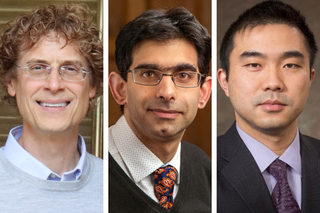
Professors Batista, Hazari, and Wang work on climate change projects for Yale Planetary Solutions
Yale Planetary Solutions has awarded seed grants to research projects pursuing novel solutions to urgent climate and environmental problems.
-
Sun, sustainability, and silicon: A double dose of Yale solar fuel research
Two Yale-led studies indicate the promise of finding hybrid approaches to developing alternative solar fuels.
-
In photos: The ‘magic’ of chemistry
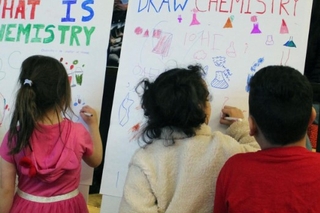
Hundreds of local students and their families filled Marsh Lecture Hall to learn about ‘The Wonderful World of Chemistry: A Magic Show.’
-
‘Nilay’s Chemistry Videos’ blends video, science — and educational equity
Nilay Hazari, a team of undergraduates, and the Yale Poorvu Center for Teaching and Learning created videos introducing foundational chemistry…
-
Videos: General chemistry concepts explained
Whether you want to learn general chemistry yourself or teach your own students, these short educational videos are a great resource.
-
-
From carbon capture to infectious disease: 'Planetary Solutions Project' seed grants span disciplines to address global environmental challenges
Professor Nilay Hazari and Hailiang Wang receive seed grants to address global environmental challenges.